

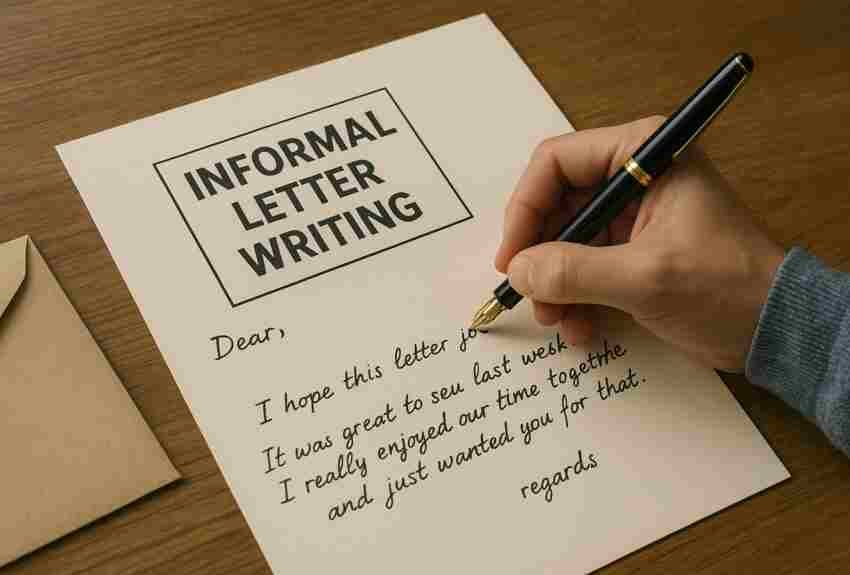
Informal letters constitute one of the most widespread types of personal letters in the English language. In contrast to formal letters, informal letters are addressed to those people whom we personally know, like our friends, relatives, and colleagues. It is through these letters that people can share their personal experiences and feelings freely.
Even though electronic forms of communication have grown in popularity, the skill of writing informal letters continues to be an essential one for students. This is because it is often taught at school and may feature in English examinations. Learning the proper way to compose an informal letter will not only enable students to communicate effectively but also enhance their writing abilities.
Through this article, you will get to understand the format of an informal letter, key elements, how to write an informal letter, mistakes to avoid, and examples.
Quick Highlights
Informal letters focus on personal communication rather than professional or official matters. They use simple language, friendly greetings, and a conversational style that reflects the relationship between the writer and the recipient.
Students often write informal letters to share news, congratulate someone, invite friends to events, describe experiences, or maintain personal connections with loved ones.
What Is an Informal Letter?
Informal letter writing is the type of writing whereby an individual writes to another individual with whom he/she has a personal relationship. Informal letters are mostly used to exchange information, congratulate, invite, or communicate other personal issues.
Unlike the case with formal letter writing, there are no set guidelines to follow when writing an informal letter. However, one is supposed to observe some basic structure.
Common Reasons for Writing Informal Letters
- Sharing personal news
- Inviting someone to an event
- Congratulating a friend
- Thanking a family member
- Describing a trip or experience
- Offering advice
- Expressing feelings and emotions
The main objective is to make personal communication with the recipient.
Why Is Informal Letter Writing Important?
Writing informal letters is an important exercise that helps students improve their writing and language skills.
Even today, despite the fact that the world is becoming digital and most of the communication takes place via emails and messaging apps, informal letter writing has become quite important from an educational point of view.
Benefits of Learning Informal Letter Writing
- Improves writing skills
- Enhances vocabulary
- Develops communication abilities
- Strengthens sentence construction
- Encourages creative expression
- Helps in school examinations
Students who write letters frequently find themselves gaining confidence in their writing skills.
Format of an Informal Letter
Letter writing is a very flexible process; nonetheless, there are certain elements that are present in a letter that make it an effective form of communication. Understanding of these elements is important for successful letter writing.
Sender’s Address
The sender’s address is normally placed at the top left-hand corner of the letter. This is done so that the recipient knows where the letter originates.
Date
The date of writing the letter is written immediately after the name and address of the sender.
Salutation
Salutation refers to the manner in which the addressee is addressed.
Common examples include:
- Dear Rahul,
- Dear Friend,
- Dear Mom,
- Dear Uncle,
Salutation should reflect the kind of relationship that exists between sender & receiver.
Introduction
It proved to be a pretty enjoyable as well as refreshing experience. I shot a lot of pictures, and also got to know a lot about the culture there. I wish you were there too; it would have made it even more fun.
Main Body
The body paragraph includes a critical point to make by the person who wrote it. This could include anything from experience sharing, inviting, congratulating, giving advice, and much more.
Conclusion
The conclusion should consist of a summary of the letter and end on a positive note. Many letters normally conclude with an anticipation from the sender of receiving replies from the addressees.
Closing
Some examples of closing lines in an informal letter include:
- Yours lovingly,
- Yours affectionately,
- Best wishes,
- With love,
- Your friend,
The writer’s name follows the closing.
How to Write an Effective Informal Letter
In addition to knowing how to write an informal letter, one has to know what goes into making a good one. In order to do that, one has to consider their purpose for sending such a letter.
Use a Friendly Tone
Formal letters must adopt the correct tone and style. Address your correspondent as if you were talking to him or her.
Keep the Language Simple
Do not use any difficult terms and jargon while writing. Simpler language helps make the letter more approachable.
Stay Organized
Structure your ideas in a logical manner. Write an introduction, state your ideas in the body section, and end your composition with a clear conclusion.
Show Genuine Emotion
Informal letters are inherently personal. Be honest when expressing feelings while writing about an experience, conveying your congratulations, saying thank you or giving any kind of advice.
Be Clear and Concise
Informal letters can be very informal, but need to communicate ideas clearly. Unnecessary repetitions are not required in such a letter.
Example of an Informal Letter
Letter to a Friend Describing a Holiday
Dear Aman,
I hope that you are doing well. We haven’t talked for a very long time now; therefore, I decided to write to you regarding my latest vacation.
During this summer season, I, along with my family members went on a visit to Manali. It was wonderful weather with great scenery of the mountains. Apart from sightseeing and exploring the local cuisine, we also engaged in various kinds of adventure sports. The visit to Solang Valley is one of the best things that I remember.
It was a refreshing as well as adventurous experience for me. In addition, I clicked some photos and gathered knowledge about the culture prevailing in that region. Unfortunately, you were not with us on this tour; otherwise, it would have been even better.
Let’s arrange to meet as soon as possible.
Yours affectionately,
Rohan
Common Mistakes to Avoid
Many students miss out on marks in exams due to their failure to recognise the basic elements of informal letter writing. An understanding of common mistakes can be helpful here.
Using Excessively Formal Language
Informal letters should sound natural and personal rather than official.
Forgetting the Format
Missing essential elements such as the date, greeting, or closing can make the letter incomplete.
Writing Very Short Letters
A good informal letter should provide enough detail to communicate effectively.
Including Unnecessary Information
Stay focused on the main purpose of the letter.
Poor Grammar and Spelling
Carefully review your writing before submission.
Tips for Students
Students can learn to write informal letters effectively by practising and reading some samples.
Helpful Writing Tips
- Read sample letters regularly
- Practice different letter topics
- Use simple and natural language
- Focus on clear paragraph structure
- Revise grammar and spelling
- Maintain a friendly tone throughout
Consistent practice helps students become more comfortable with letter-writing tasks.
Conclusion
Letters in English continue to be very important means of communicating and interacting with each other in different aspects of life. This is a very interesting way of sharing one’s experience, feelings, and maintaining relationships in a friendly manner. With the proper knowledge of how to structure such letters and communicate through them, learners can learn how to write informal letters effectively.
Through proper practice and structuring of ideas, learners can become excellent writers of informal letters.
Frequently Asked Questions
1. What is an informal letter?
An informal letter is a personal letter written to friends, family members, relatives, or close acquaintances. It uses a friendly and conversational tone rather than a formal style.
2. What is the purpose of an informal letter?
The purpose of an informal letter is to share personal news, express feelings, invite someone to an event, offer congratulations, give advice, or maintain relationships with people you know well.
3. What are the main parts of an informal letter?
The main parts of an informal letter include:
Sender’s address
Date
Salutation (greeting)
Introduction
Main body
Conclusion
Closing and signature4. How is an informal letter different from a formal letter?
An informal letter is written to someone you know personally and uses casual language. A formal letter is written for official or professional purposes and follows a more structured and professional tone.
5. What are some common topics for informal letters?
Common informal letter topics include:
Describing a holiday
Inviting a friend to a birthday party
Congratulating someone on an achievement
Thanking a relative
Sharing personal experiences
Giving advice to a friend6. What greeting should I use in an informal letter?
Some commonly used greetings are:
Dear Friend,
Dear Rahul,
Dear Sister,
Dear Uncle,
The greeting should match your relationship with the recipient.7. What closing phrases can be used in an informal letter?
Popular closing phrases include:
Yours lovingly,
Yours affectionately,
Best wishes,
With love,
Your friend8. How long should an informal letter be?
An informal letter should usually be between 150 and 300 words for school assignments and examinations unless specific instructions are given.
9. Can informal letters be asked in exams?
Yes. Informal letter writing is a common question in school English examinations and language proficiency tests because it assesses communication and writing skills.
10. What are the most common mistakes in informal letter writing?
Some common mistakes include:
Using overly formal language
Forgetting the date or closing
Poor paragraph structure
Grammar and spelling errors
Not addressing the purpose of the letter clearly11. How can I improve my informal letter-writing skills?
You can improve by:
Reading sample letters
Practising different topics regularly
Expanding your vocabulary
Following the correct format
Reviewing grammar and punctuation before submission12. Why is informal letter writing important for students?
Informal letter writing helps students develop communication skills, improve grammar and vocabulary, organize ideas effectively, and perform better in English examinations.