

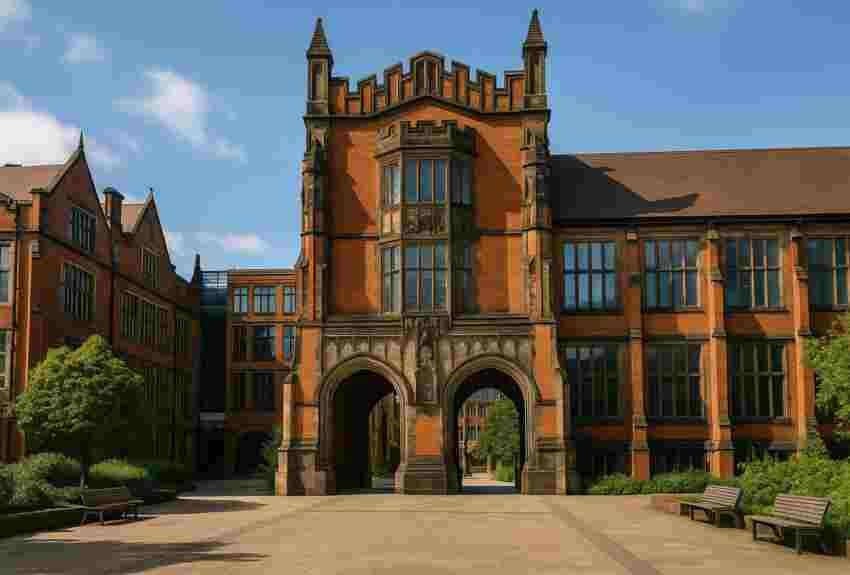
Newcastle University is one of the UK’s most respected public research universities and a well-known member of the Russell Group. Located in Newcastle upon Tyne, a city known for its energy, affordability and student-friendly environment, the university attracts thousands of international students each year.
What makes Newcastle stand out for students is the balance it offers strong academic standards, practical learning, modern facilities and a cost of living that is far lower than most major UK cities. Whether your goal is engineering, computer science, business, health sciences or creative subjects, the university provides a broad set of programs designed to prepare you for global careers.
This guide explores Newcastle University’s acceptance rate, rankings, fees, top courses, entry requirements, admission process, accommodation options and career prospects in a detailed and student-focused way.
Why Newcastle University Is Popular Among International Students
Many students choose Newcastle University because it offers a learning experience that is both academically strong and personally supportive.
Balanced academic environment
Newcastle combines theoretical knowledge with practical application. This is especially useful in fields like engineering, computer science, architecture and business where hands-on experience is crucial.
Student-friendly city
Newcastle is consistently rated as one of the most affordable cities in the UK. Transport, food, housing and entertainment cost far less than places like London or Birmingham.
Strong support services
The university has a dedicated international office, career services, counselling support, academic advisors and visa guidance teams.
Rich culture and lifestyle
The city is known for its arts, music, sports, nightlife and welcoming local community.
High employability
Newcastle’s global reputation, combined with its strong industry connections, helps students find internships, placements and full-time opportunities easily.
Newcastle University Rankings (2026)
Newcastle consistently ranks well at both national and international levels.
Global Rankings
- Top 150 worldwide – QS World University Rankings 2026
- Top 180 worldwide – Times Higher Education (THE) 2026
- Top 200 worldwide – ARWU Global Ranking
UK Rankings
- Top 25 – Complete University Guide
- Top 30 – The Guardian University Guide
The university has high subject rankings in:
- Engineering
- Computer Science
- Medicine
- Architecture
- Business and Management
- Social Sciences
Newcastle’s research impact, teaching quality and employability scores play a major role in these rankings.
Newcastle University Acceptance Rate (2026)
Newcastle University has an acceptance rate of around 60%–70%.
This makes it moderately competitive more selective than many UK universities but still accessible with a strong academic profile.
Programs with higher competition:
- Medicine
- Dentistry
- Architecture
- Computer Science
- Law
For most other subjects, students with solid academic grades, a clear personal statement and strong references have a good chance of admission.
Top Courses at Newcastle University (UG & PG)
Newcastle University offers a wide range of programs, and many are designed with industry input for better career preparation.
Most Popular Undergraduate Courses
- Computer Science BSc
- Mechanical Engineering BEng
- Civil Engineering BEng
- Business Management BA
- Law LLB
- Psychology BSc
- Architecture BA
- Marine Engineering
- Medicine MBBS
- Digital Marketing BA
Most Popular Postgraduate Courses
- MSc Data Science
- MSc Computer Science
- MSc Business Analytics
- MSc Artificial Intelligence
- MSc Mechanical Engineering
- MSc Civil & Structural Engineering
- MBA
- MSc Public Health
- MSc Finance
- MSc Cyber Security
Many of these programs offer internship opportunities, research projects and practical learning.
Newcastle University Fees for International Students (2026)
Undergraduate Fees: £21,000 – £28,500 per year
Postgraduate Fees: £22,000 – £32,000 per year
Courses in medicine, engineering, computing and business are priced higher due to lab work, facilities and industry partnerships.
Living Costs in Newcastle
Newcastle is considered one of the most affordable major cities in the UK, especially compared to London, Manchester or Edinburgh.
Estimated yearly living cost: £9,500 – £13,000
This includes accommodation, food, travel, supplies and entertainment.
Eligibility Requirements for International Students
Undergraduate Requirements
- Minimum 65%–80% in 12th grade
- English proficiency:
- IELTS 6.0–6.5
- Strong personal statement
- Academic reference
- Portfolio for design/architecture subjects
Postgraduate Requirements
- Bachelor’s degree with 55%–65%
- IELTS 6.5 (no band below 6.0)
- Personal statement
- CV/Resume
- Reference letters
- Portfolio (if required)
Newcastle University Admission Process (Step-by-Step)
Step 1: Select your course
Explore program details, entry requirements, and career outcomes.
Step 2: Prepare your documents
Transcripts, certificates, SOP, references, English test scores.
Step 3: Apply online
- Undergraduate: via UCAS
- Postgraduate: via Newcastle application portal
Step 4: Wait for the decision
Offers are typically issued in 2–6 weeks.
Step 5: Accept the offer & pay the deposit
Step 6: Receive CAS
Step 7: Apply for UK student visa
Accommodation for Students at Newcastle University
Newcastle offers a variety of housing options, both on-campus and off-campus.
On-Campus Accommodation
Some popular residences include:
- Park View
- Castle Leazes
- Kensington Terrace
- Richardson Road
- Liberty Plaza
Price range: £110 – £200 per week
Many students choose areas like:
- Jesmond
- Sandyford
- Heaton
- City Centre
Price range: £90 – £180 per week
These options include shared flats, studios and private halls.
Career Opportunities After Studying at Newcastle
Newcastle University graduates work in fields such as:
- Software development
- Engineering
- Data science
- Architecture
- Finance
- Healthcare
- Consulting
- Public sector
Average graduate salary: £26,000 – £42,000
The Careers Service provides guidance on CV writing, interview preparation, job fairs and internship connections.
Conclusion
Newcastle University offers an excellent blend of academic quality, practical learning, supportive services and an affordable student lifestyle. Its strong global reputation, Russell Group status and industry-focused programs make it a solid choice for students aiming for high academic standards and global career opportunities. With a welcoming city environment and a wide range of accommodation choices, Newcastle provides everything needed for a successful and enjoyable study abroad experience.
Frequently Asked Questions
1. Is Newcastle University good for international students?
Yes, Newcastle University is highly regarded for its supportive learning environment, strong academic reputation and student-focused services. International students benefit from dedicated visa support, personalised academic advising and access to career guidance. The city is also friendly, affordable and multicultural, making it easy for students to adapt.
2. What is Newcastle University ranked globally?
Newcastle consistently ranks within the top 150–200 universities worldwide depending on the ranking system. Its strengths are in research output, teaching quality and graduate employability. Subject-specific rankings in engineering, computing, medicine and business are even higher, reflecting the university’s strong reputation in these fields.
3. Is Newcastle University hard to get into?
Newcastle’s acceptance rate of 60–70% means it is moderately competitive. While entry into programs like Medicine, Architecture and Computer Science is tougher, many other subjects have more flexible entry requirements.
4. How much does it cost to study at Newcastle University?
Tuition fees range from £21,000 to £32,000 per year, depending on the program and level of study. Engineering, computing and medical programs are priced higher due to practical components and lab facilities. Additionally, students should budget around £9,500–£13,000 per year for living costs.
5. Does Newcastle University offer scholarships?
Yes. Newcastle offers several scholarships for international students, including merit-based awards, country-specific funding and subject-based scholarships. These scholarships can reduce tuition costs significantly and are often awarded based on academic performance, leadership qualities or personal achievements.
6. What are the English language requirements for Newcastle University?
Most undergraduate and postgraduate programs require IELTS 6.0–6.5, although some courses may set higher requirements. Alternatives such as TOEFL, PTE and Duolingo are also accepted. Students who do not meet the English requirements may be offered a pre-sessional English course.
7. Is Newcastle an affordable city for students?
Yes. Newcastle is one of the most affordable major cities in the UK. Accommodation, food and public transport are much cheaper compared to cities like London or Edinburgh.
8. What are the best courses at Newcastle University?
Newcastle is known for its strong programs in Engineering, Computer Science, Architecture, Business, Medicine, and Social Sciences. Many courses include industry placements, practical projects and research experience, allowing students to gain real-world skills during their studies.
9. Does Newcastle University support part-time work for students?
Yes. International students on a valid UK student visa can work up to 20 hours per week during term time and full-time during holidays. The university’s career service often lists part-time roles suitable for students.
10. How long does it take to receive an offer from Newcastle University?
Decisions usually take 2–6 weeks, depending on the program and time of application. Highly competitive programs may take longer. Applying early increases the chances of receiving a faster decision and suitable accommodation.
11. Is accommodation guaranteed for international students?
Yes, Newcastle University generally guarantees accommodation for first-year international students who apply before the deadline. Students can choose from en-suite rooms, shared flats, catered accommodation or studio options.
12. What is the student life like at Newcastle University?
Student life at Newcastle is vibrant and diverse. The city is known for its friendly community, lively nightlife, cultural events and sports activities. The university also hosts hundreds of clubs and societies, making it easy for students to meet new people and explore new interests.